


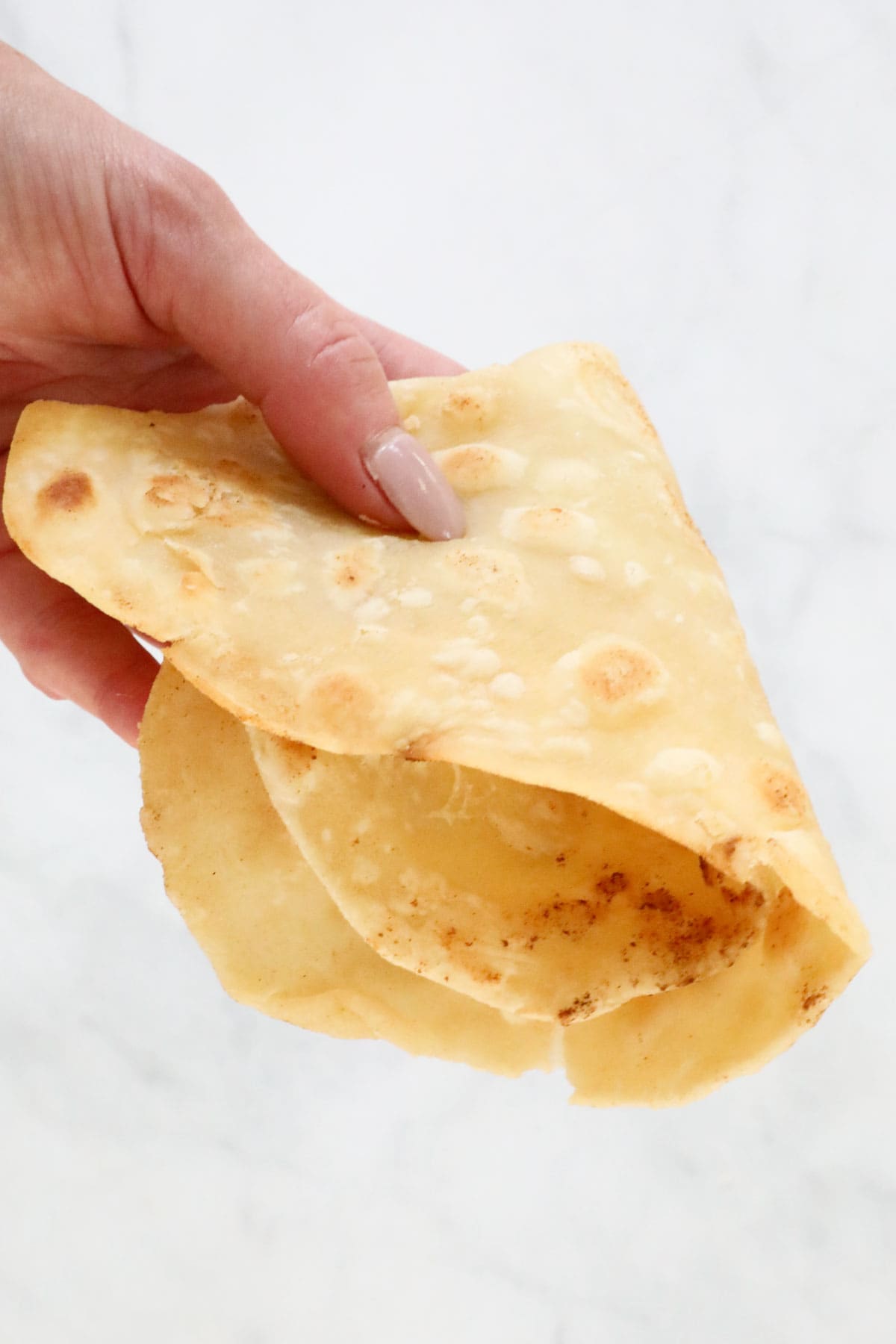
Homemade Roti Bread is buttery, soft, and flaky - and the best part? You only need four pantry staples to make it. Perfect for scooping up your favourite curries, serving alongside a slow-cooked dinner, or dipping into a hearty soup. If you love quick and easy bread mixes like my homemade bread rolls or gluten free pizza dough, then this recipe will be right up your alley.
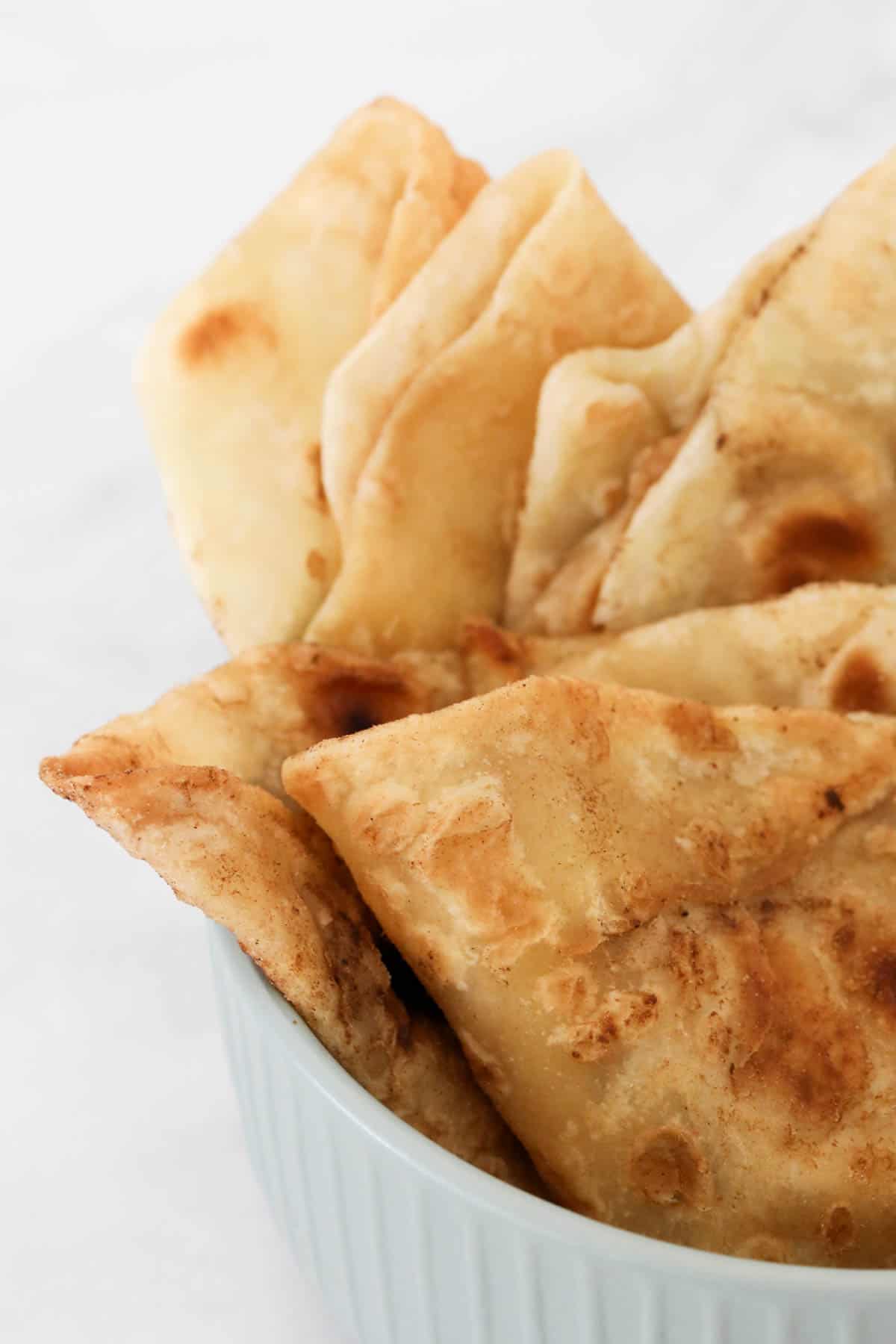
Roti bread is a simple unleavened flatbread that originates from India but is now enjoyed all over the world. Unlike naan, which is thicker and uses yeast or yogurt, roti is light, flaky, and made without rising agents - just flour, water, butter, and salt.
It's the kind of bread you can whip up at home in an hour (resting time included) and feels so much fresher and tastier than store-bought. My family loves tearing pieces off while it's still warm and dipping them into slow cooked Butter Chicken and Chicken Korma, or serving them with a steaming bowl of Roasted Pumpkin Soup.
The secret is rolling the dough paper-thin and cooking it quickly in a hot pan with just a little butter, which gives you those delicious golden bubbles.
Why You're Going To Love This Recipe
- ⭐ 4 ingredients only - no yeast, no yoghurt, no fuss.
- ⭐ Quick and easy - this roti recipe is ready in under an hour.
- ⭐ Soft and buttery - perfect for scooping up curries, dips, or soups.
- ⭐ Budget-friendly - uses pantry staples you already have at home.
- ⭐ Freezer-friendly - make a big batch and stash some away for busy nights.
Jump to:
Roti Ingredients
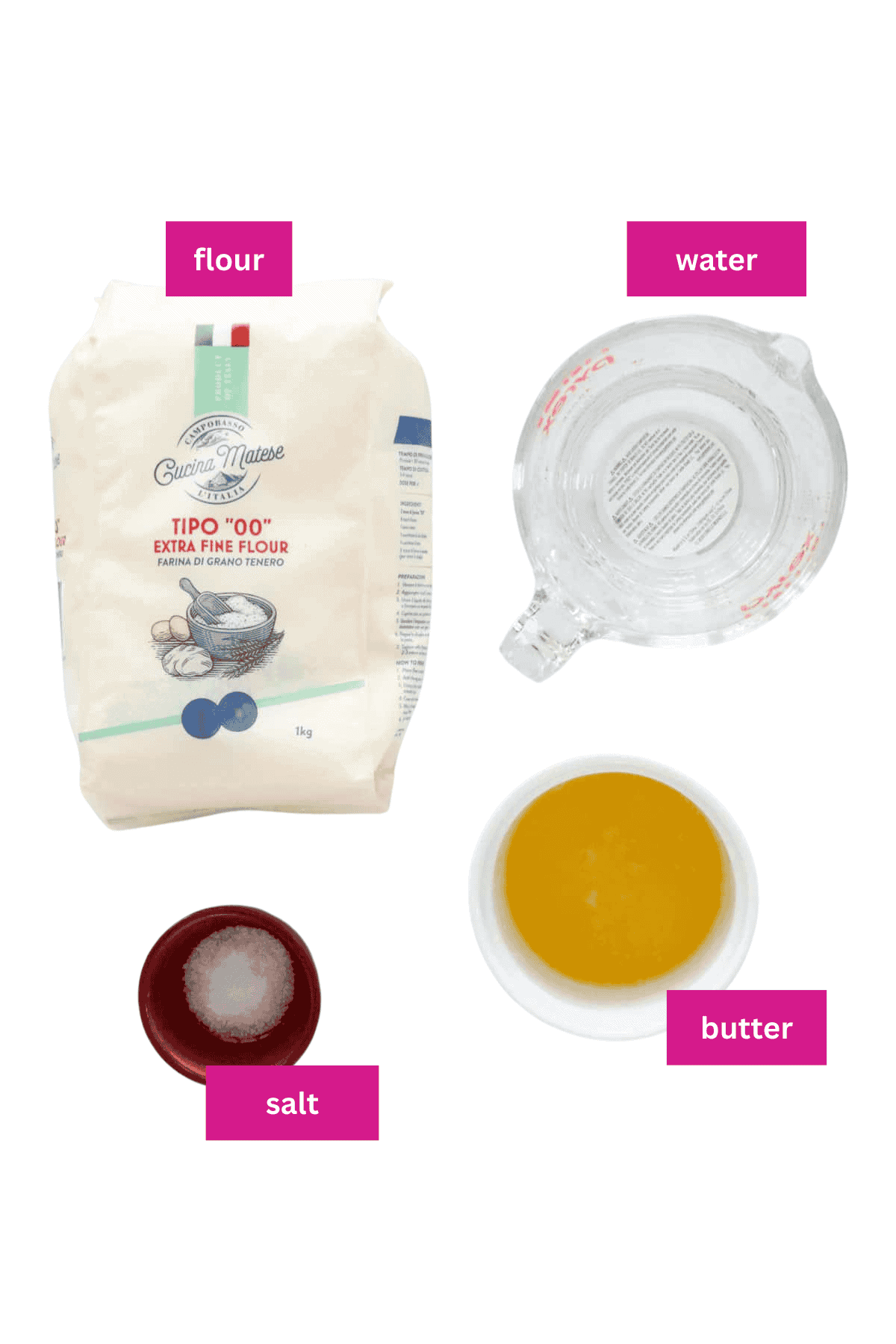
Just 4 staple ingredients to make this buttery, fresh chapati/Indian flatbread!
Note: Scroll to the recipe card at the bottom for the ingredients quantities and full detailed method.
- Bread flour or plain flour - bread flour gives a slightly chewier texture, but plain all purpose flour works beautifully too.
- Butter - adds richness and helps create flaky layers. Use melted butter for the dough, and extra butter for frying.
- Warm water - make sure it's just warm (not hot), as this helps the dough come together smoothly.
Variations
- Gluten-free roti - swap the flour for a good quality gluten-free plain flour blend (with xanthan gum for elasticity).
- Garlic roti - add 1-2 minced garlic cloves or a sprinkle of garlic powder to the melted butter before brushing.
- Herbed roti - mix dried herbs (oregano, rosemary, or coriander) through the flour for extra flavour.
- Dairy-free roti - replace the butter with olive oil or dairy-free margarine.
Need To Substitute An Ingredient?
Ask ChatGPT for suggestions on how to substitute the particular ingredient:
How To Make Roti Bread
Making homemade roti bread is simple - just mix, knead, rest, roll paper-thin, and cook until soft, golden and buttery.
Note: Scroll to the recipe card at the bottom for the ingredients quantities and full detailed method.
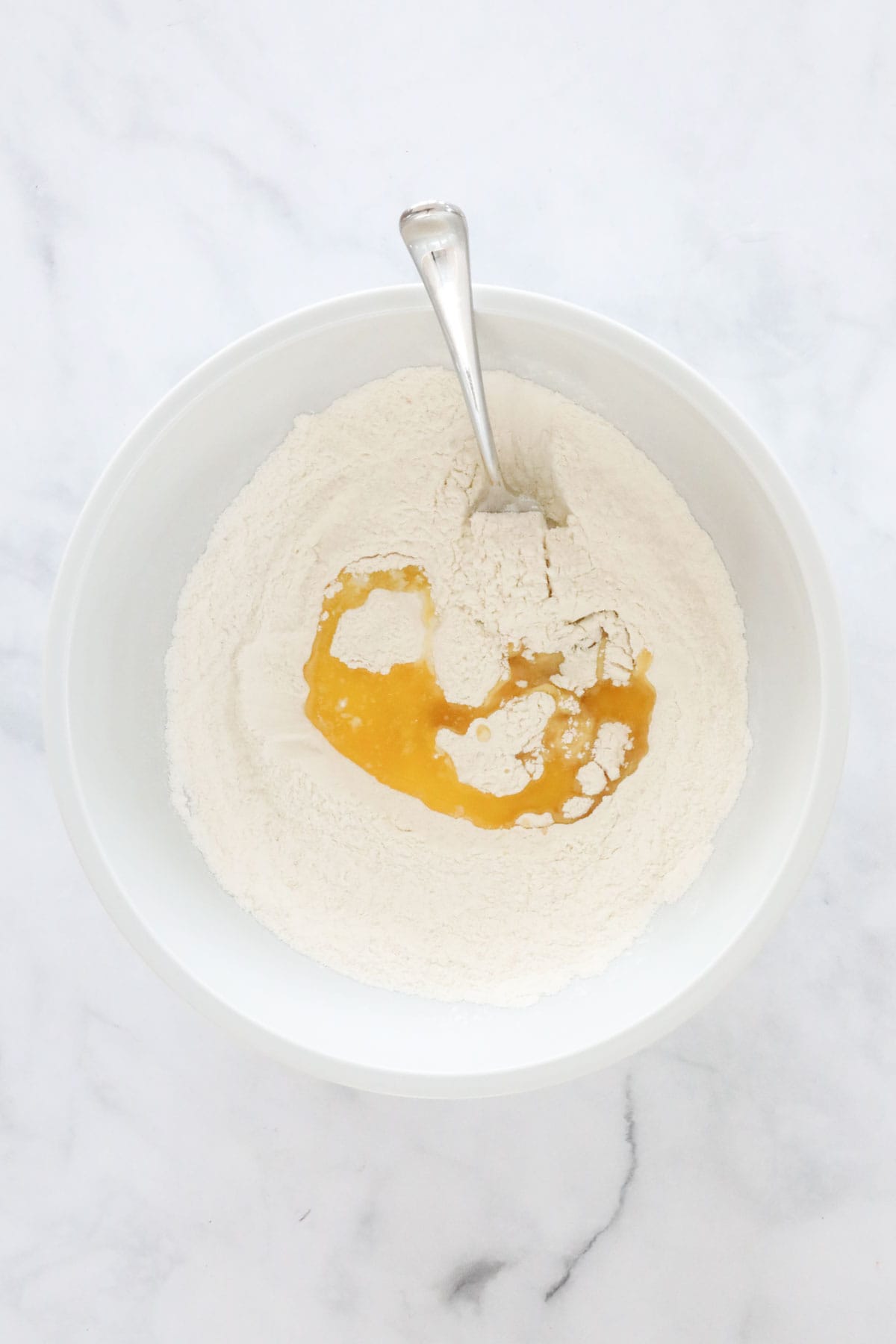
- Mix the dough - sift flour into a large bowl and add salt. Pour in the melted butter.
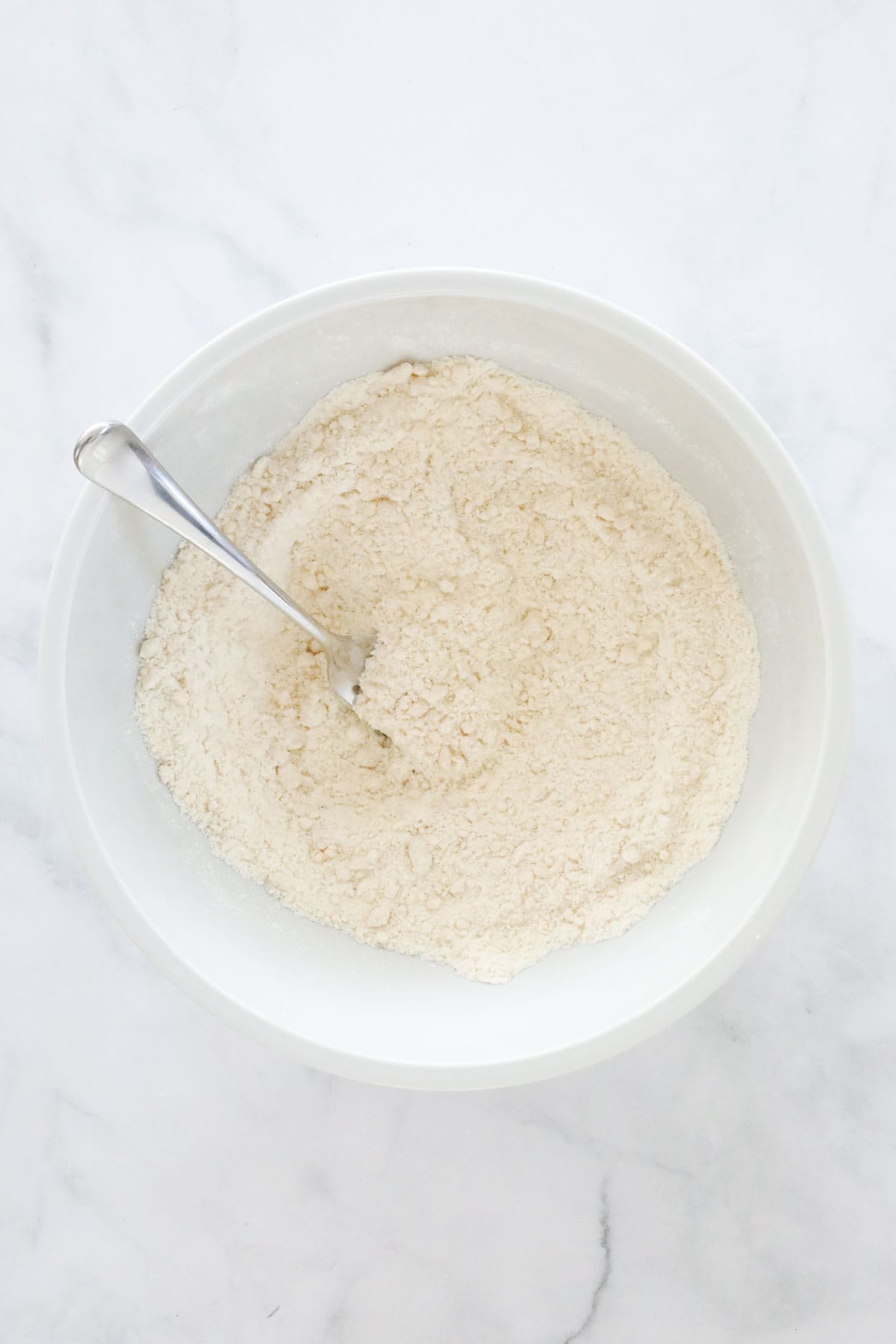
- Whisk the melted butter - through the flour using a fork until evenly dispersed.
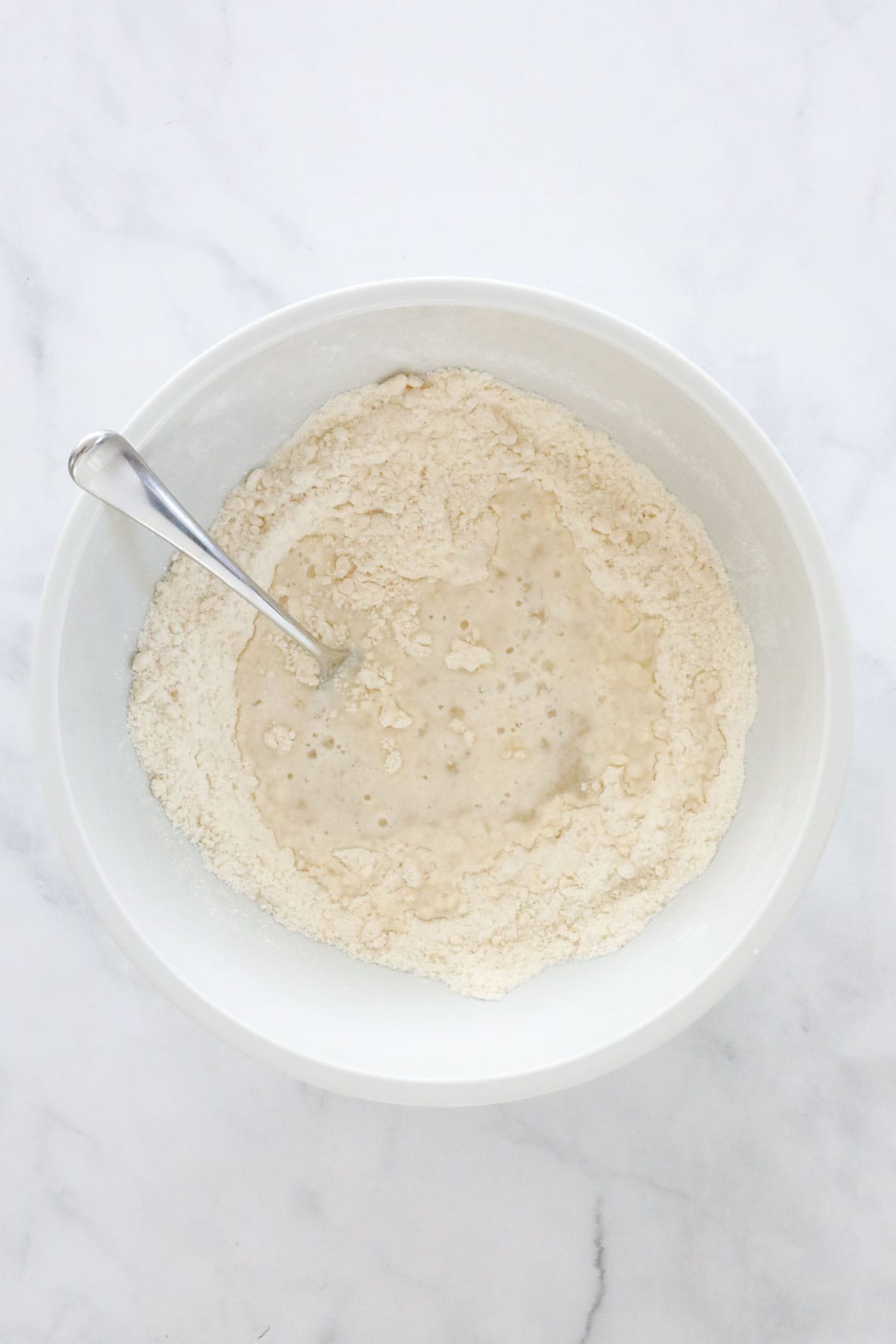
- Add warm water - mixing until it forms a sticky dough.
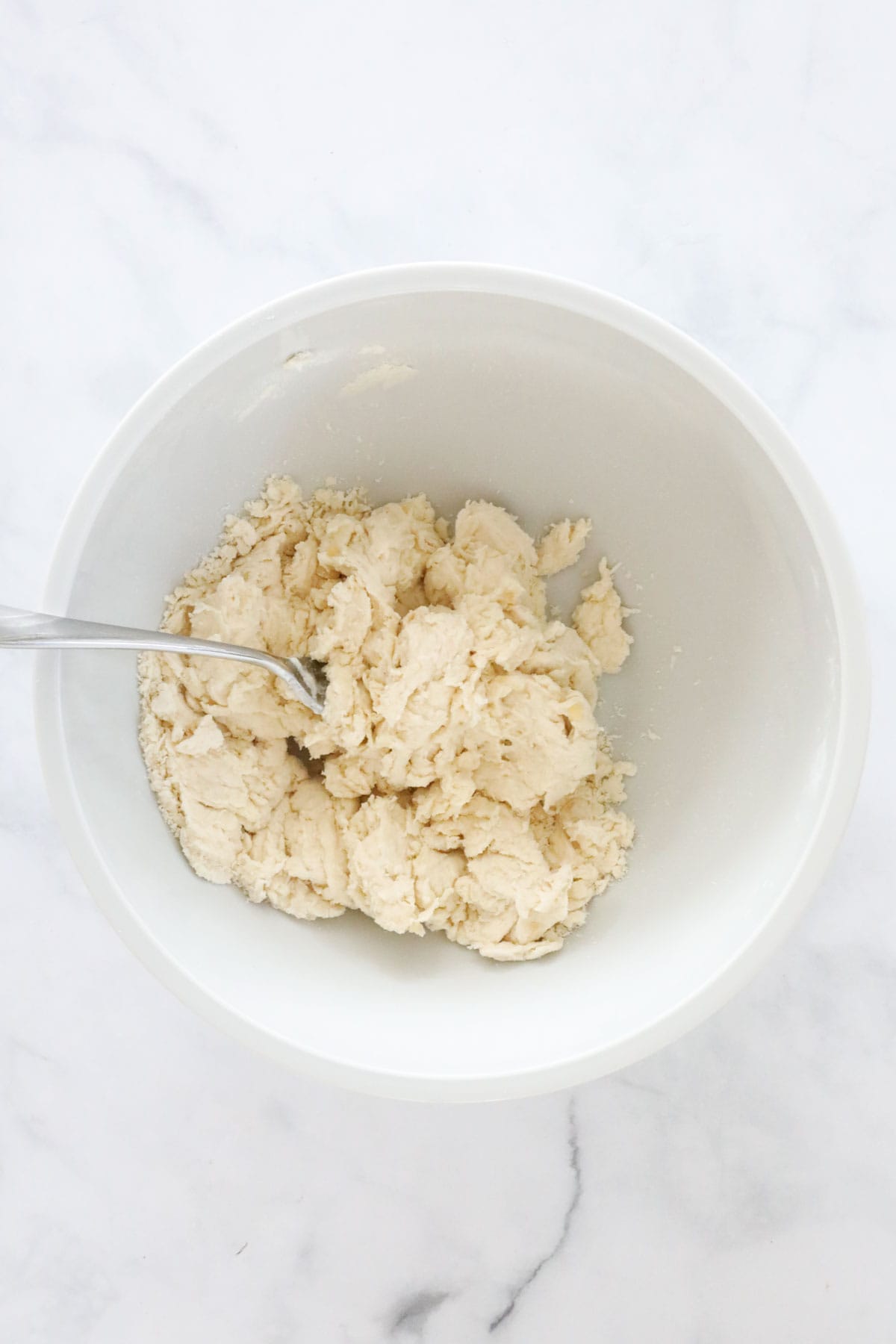
- Mix - until the dough starts to come together.
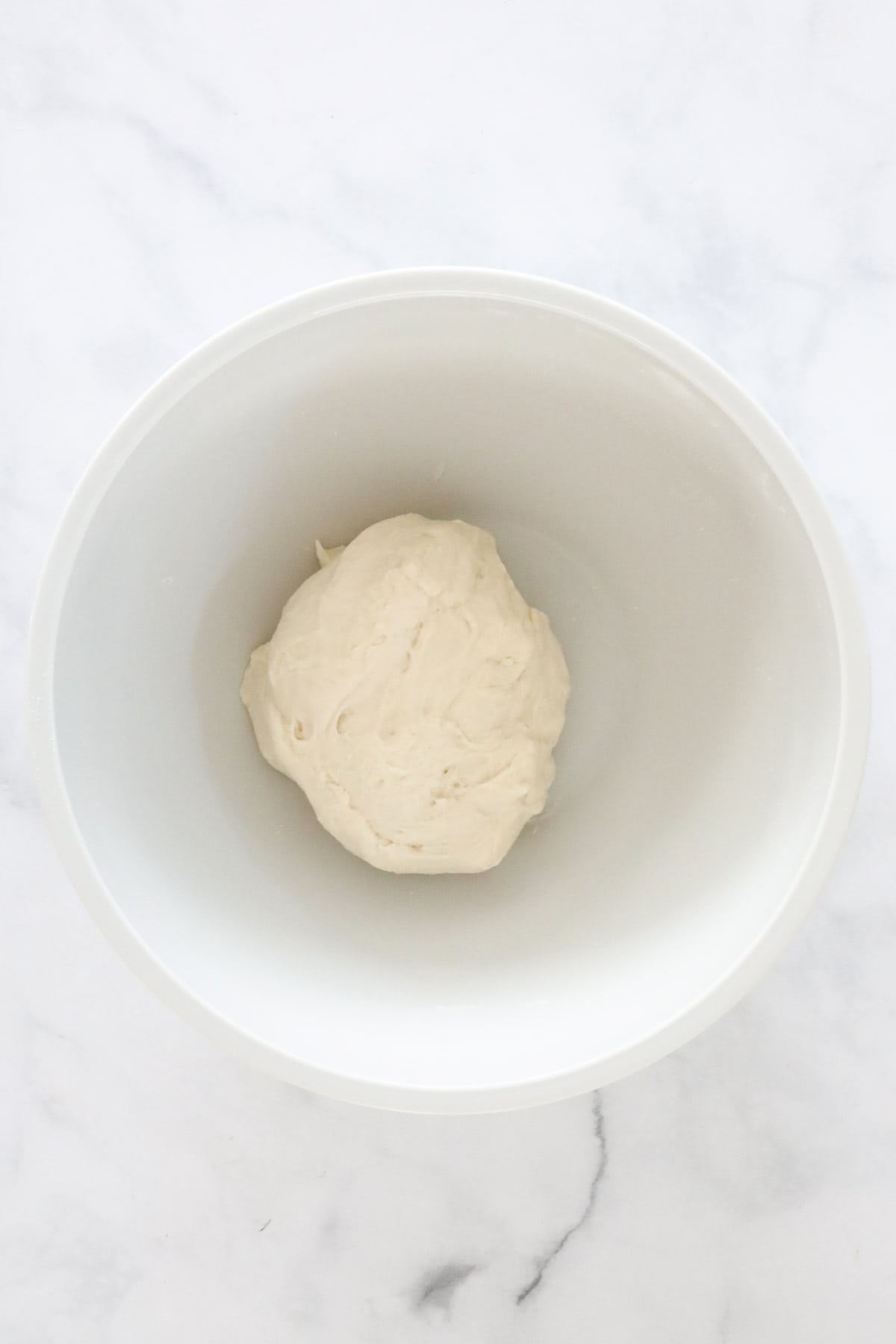
- Knead - for 6-8 minutes until smooth and stretchy. (Stand mixer, Thermomix, or by hand - all work!). Cover and rest for 30 minutes. Note: The dough won't rise, but resting makes it easier to roll thin.
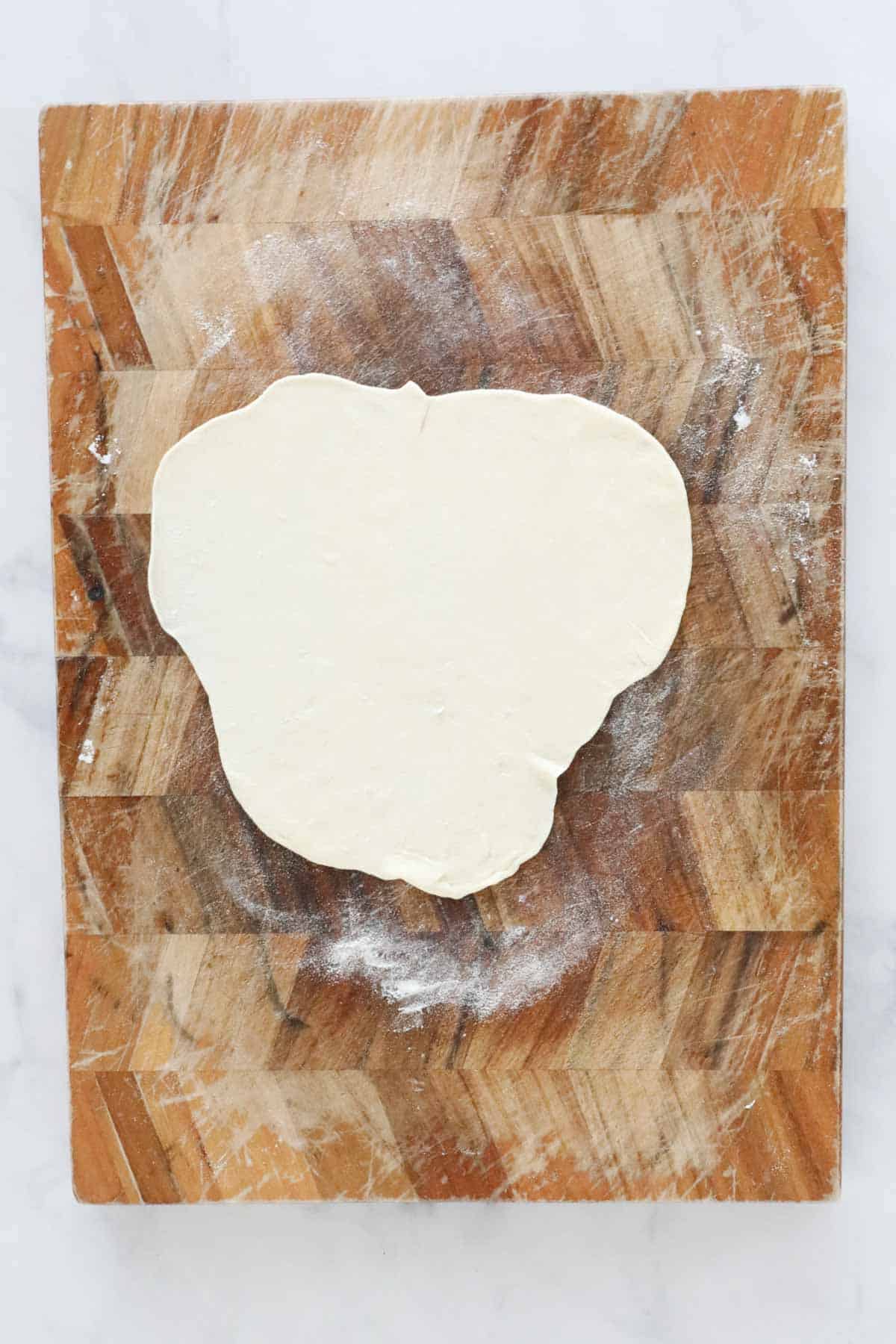
- Divide & roll - cut into 8 portions. Roll each one paper-thin with a rolling pin on a lightly floured surface. Heat a pan on the stove over medium-high heat with a little butter.
Cook each rolled roti for 30-45 seconds on the first side until golden bubbles form, flip to the second side, and cook for 20-30 seconds more or until nice brown spots have formed. Keep warm while you cook the rest.
Recipe Tips
- Roll the dough as thinly as possible for soft, flexible roti.
- If the dough springs back while rolling, let it rest a few extra minutes.
- Don't skip resting time - the dough will not rise; however, it makes it easier to roll, and it cooks soft instead of chewy.
- For extra crispiness, use a cast-iron pan as this holds the heat best.
- Brush with melted butter or ghee after cooking for added flavour.
- Keep cooked roti covered with a damp cloth or paper towel (or in a container with a lid), to stay warm and moist while the rest are being cooked.
- Best served immediately, but leftovers will keep for up to 3 days at room temperature.
- To freeze - layer baking paper between leftover rotis, freeze in an airtight bag for up to 2 months. Thaw and reheat in a hot pan.
Roti Bread FAQs
Roti is an unleavened bread made with flour, water, and butter, while naan is thicker, often includes yoghurt, and uses yeast as a rising agent.
Usually, it's because the dough isn't rolled thin enough or isn't allowed to rest. Make sure to roll the paper-thin dough and allow it to relax.
Yes - you can make the dough ahead, form it into a smooth ball and store it in the refrigerator (covered) for up to 24 hours. Please bring it to room temperature before rolling.
A cast-iron skillet or heavy non-stick pan works best because it holds high heat for those golden bubbles.
Absolutely. Stack with baking paper in between, freeze flat, and reheat straight from frozen in a hot pan.
Related Recipes For Roti Bread
Roti bread goes with so many dishes, not just curries! Here are some easy recipes that are SO delicious served with some warm roti bread on the side:


WANT EVEN MORE DELICIOUS RECIPES? Subscribe to my newsletter or follow along on Facebook or Instagram. And if you love baking, then please come and join my Facebook cooking club group or subscribe to my YouTube channel.

Roti Bread
Ingredients
- 300 g (2 cups) bread flour or plain flour
- 1 tsp salt
- 30 g (2 tbs) butter melted
- 165 g (⅔ cup) warm water
- extra butter for frying
Instructions
- Sift the flour into a large bowl. Add the salt and mix to combine.
- Pour the melted butter into the bowl and whisk with a fork until dispersed.
- Pour in the warm water and mix until the dough starts to come together.
- Knead the dough for 6-8 minutes or until very stretchy and sticky. Note: You can knead the dough by hand on a lightly floured board, or in a stand mixer with a dough attachment, or by using the dough function on a Thermomix.
- Place the dough into a bowl, cover with a tea towel and rest for 30 minutes. Note: the dough will NOT rise - the resting time helps to ensure the roti is soft once cooked. You can omit the resting time if necessary.
- Divide the dough into 8 equal portions.
- On a lightly floured board, roll the dough out as thin as you possibly can (paper thin!)
- Melt 1 teaspoon of butter in a frying pan over medium heat.
- Place the roti bread into the frying pan and cook for 30-45 seconds or until it's lightly golden on the bottom and slightly bubbling. Turn the roti bread over and cook for a further 20-30 seconds.
- Place the roti bread into a container with a lid (or a ziplock bag). Place a slightly damp sheet of paper towel over the top and seal to keep the roti warm. Note: this keeps the bread moist and warm while you cook the remaining roti.
- Repeat cooking the remaining roti using extra butter each time.
- Serve immediately while still warm.
Notes
- Knead the dough - by hand on a lightly floured board, or in a stand mixer with a dough attachment or by using the dough function on a Thermomix.
- Roll the dough as thinly as possible for soft, flexible roti.
- If the dough springs back while rolling, let it rest a few extra minutes.
- Don't skip resting time - the dough will not rise however it makes it easier to roll, and cooks soft instead of chewy.
- For extra crispiness use a cast-iron pan as this holds the heat best.
- Brush with melted butter or ghee after cooking for added flavour.
- Keep cooked roti covered with a damp paper towel or in a container with a lid, to stay warm and moist while the rest are being cooked.
- Best served immediately, but leftovers will keep for up to 3 days at room temp.
- To freeze - layer baking paper between rotis, freeze in an airtight bag for up to 2 months. Thaw and reheat in a hot pan.




Leave a Reply