
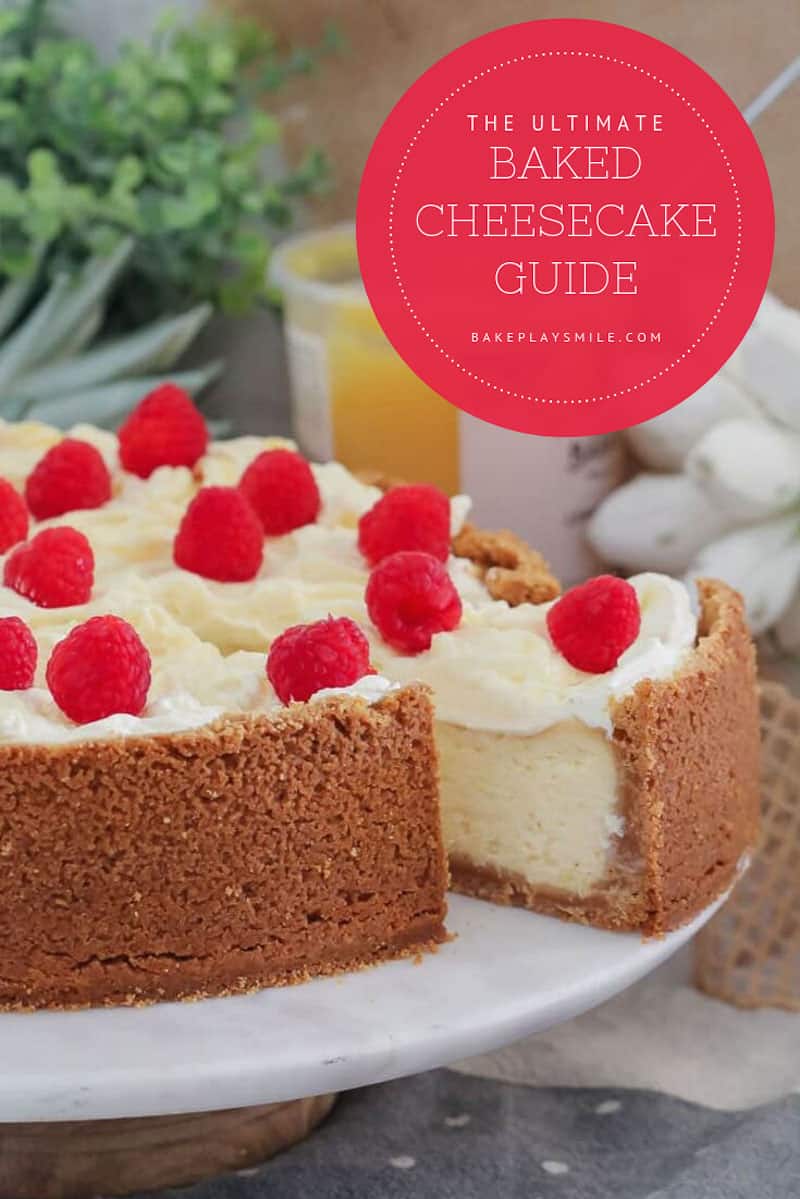
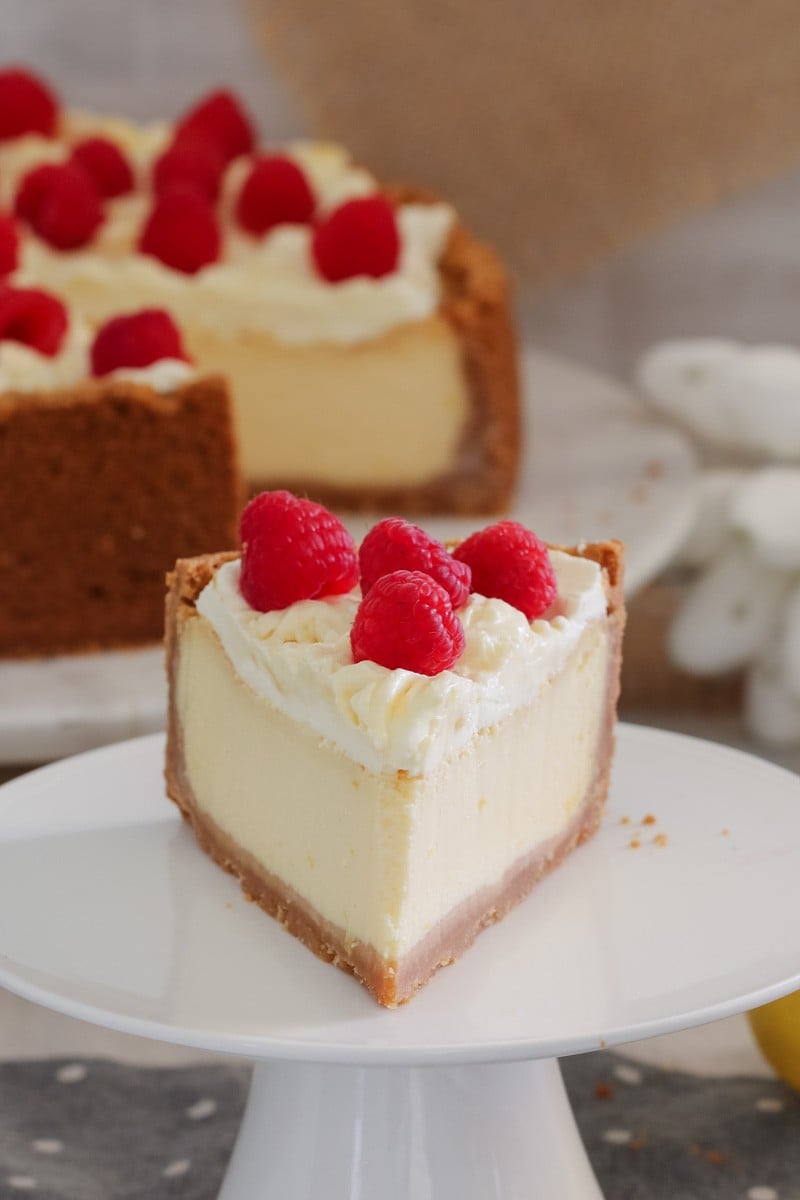
Why does cheesecake crack or bulge - and how do you bake one perfectly every time? Here's exactly what causes the most common cheesecake baking mistakes, and how to avoid every one of them.
Quick Look: Avoiding Cheesecake Mistakes
🍰 Post: How to Avoid Common Cheesecake Baking Mistakes
🌡️ Key technique: Room-temperature, full-fat ingredients + low, slow baking
💧 Pro tip: A tray of water on the lowest oven shelf helps prevent cracking
🚪 Biggest mistake: Opening the oven door during or right after baking
🧊 After baking: Rest in the switched-off oven for 2 hours, then chill for at least 4
Jump to:
What Causes A Cheesecake To Crack Or Bulge?
Most cheesecake problems come down to three things: too much air in the batter, an oven that's too hot, and a sudden change in temperature.
- Over-beating the mixture incorporates too much air, which expands during baking and causes the surface to crack.
- An oven that runs too hot causes the cheesecake to bulge and rise too quickly, which leads to cracking as it falls back down.
- Opening the oven door mid-bake (or straight after) causes a rapid temperature change that makes the cheesecake sink and crack.
The good news? All three are easy to avoid - here's how.
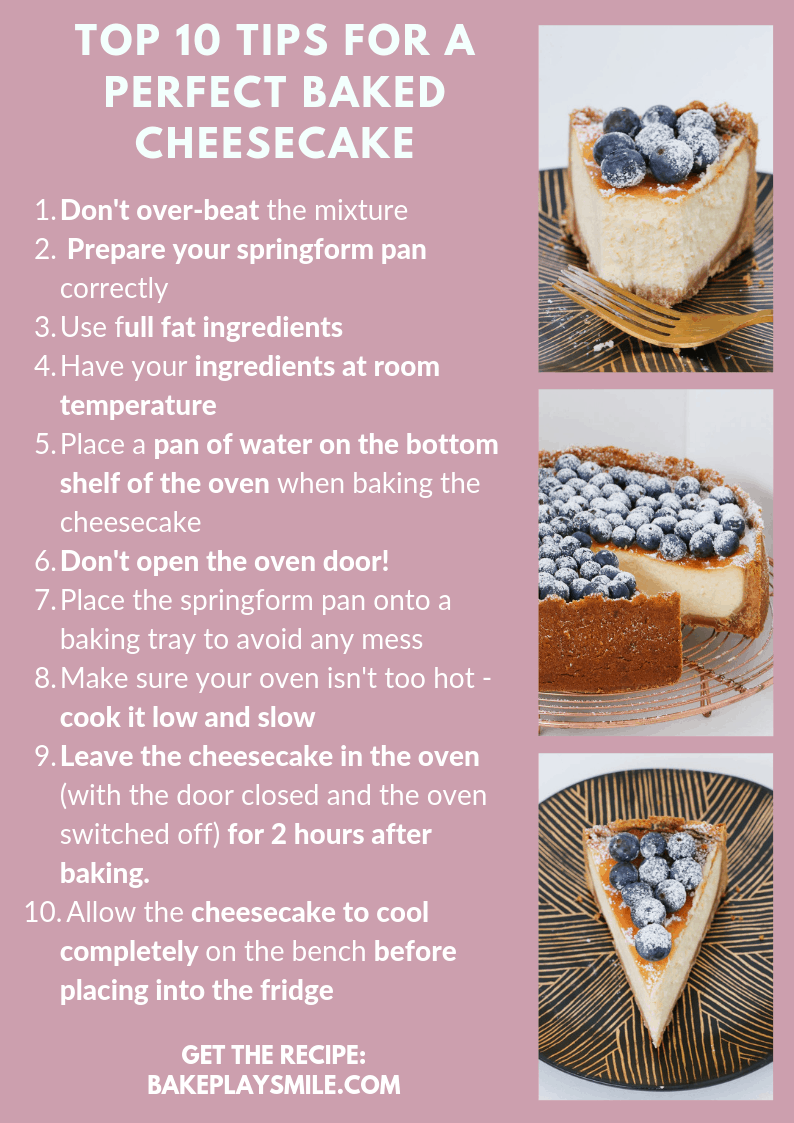
10 Mistakes To Avoid When Baking A Cheesecake
1. Over-Beating The Mixture
Over-beating will cause the cheesecake to crack when cooking. Mix with hand-held beaters or a stand-mixer on medium/low speed. It's important to mix until only just combined - you don't want to get too much air into your cheesecake mixture as it's meant to be dense and firm when baked.
2. Not Preparing Your Springform Pan Properly
Skipping this step is how cheesecakes end up stuck to the tin! Remove the bottom tray, grease it, place a sheet of baking paper over the top and then secure it with the clasps. This makes it easier to move the cheesecake onto a serving dish. Ensure that you also grease and line the sides of the pan with baking paper too.
3. Using Low-Fat Ingredients
Full fat cream cheese and full fat sour cream really do work best in cheesecakes and will give you the ultimate rich and creamy texture. If you're making a cheesecake, commit to the full-fat version.
4. Using Cold Ingredients
For best results, make sure all of your ingredients are at room temperature before mixing (cream cheese, eggs and sour cream).
5. Skipping The Water Tray
If you want an extra luscious and creamy cheesecake, place a tray of water in the oven on the lowest shelf and place the cheesecake on a middle shelf. This will also help to prevent cracking.
6. Opening The Oven Door
This is quite possibly the most important mistake to avoid. Opening the door will change the temperature and cause the cheesecake to sink and crack. Once the cooking time has finished, still do NOT open the oven door - leave it closed (with the oven turned off) for at least 2 hours before opening.
7. Skipping The Baking Tray Underneath
Avoid any mess or spills by placing your springform pan onto a baking tray before cooking. Because the cheesecake is cooked in a springform pan, some of the butter from the cookie base may escape through the small cracks - and your baking tray will be there to catch any drips!
8. Baking At Too High A Temperature
Make sure your oven isn't too hot - if it is, the cheesecake may crack. Keep in mind that oven temperatures can vary, so if you think yours runs a little hot, turn it down slightly before baking.
9. Removing The Cheesecake From The Oven Too Soon
After baking the cheesecake, make sure you leave it in the oven for at least two hours with the door closed as this will help to prevent the cheesecake from cracking.
10. Rushing The Chilling Time
Once it's out of the oven, leave it on the bench until it has cooled completely (still in the baking pan), then place into the fridge for a minimum of 4 hours (preferably overnight).
Frequently Asked Questions
The three biggest are over-beating the batter (which adds air and causes cracking), baking at too high a temperature (which causes bulging), and opening the oven door during or right after baking (which causes sinking and cracking). See the full list of 10 above for how to avoid each one.
The three that make the biggest difference are using full-fat ingredients at room temperature, placing a tray of water in the oven while baking, and never opening the oven door until the cheesecake has cooled for at least 2 hours.
Follow all 10 tips above, but if you only remember two: bake low and slow, and don't open the oven door - those two alone prevent most cracking and sinking problems.
Slightly underbaking is safer. A cheesecake continues to cook and set as it slowly cools in the oven, so trust the recipe's cooking time rather than opening the oven to check - checking early is what leads to overcooking, cracking or sinking.
New York Vs Italian Cheesecake
- The filling in a New York cheesecake is made from cream cheese, as compared to an Italian cheesecake which is made with ricotta cheese.
- A New York cheesecake tends to be richer and smoother, whereas an Italian cheesecake is lighter and drier.
- Traditionally, a New York cheesecake is made with cream cheese, sour cream (or heavy cream) and eggs which gives it its beautiful firm and dense texture.
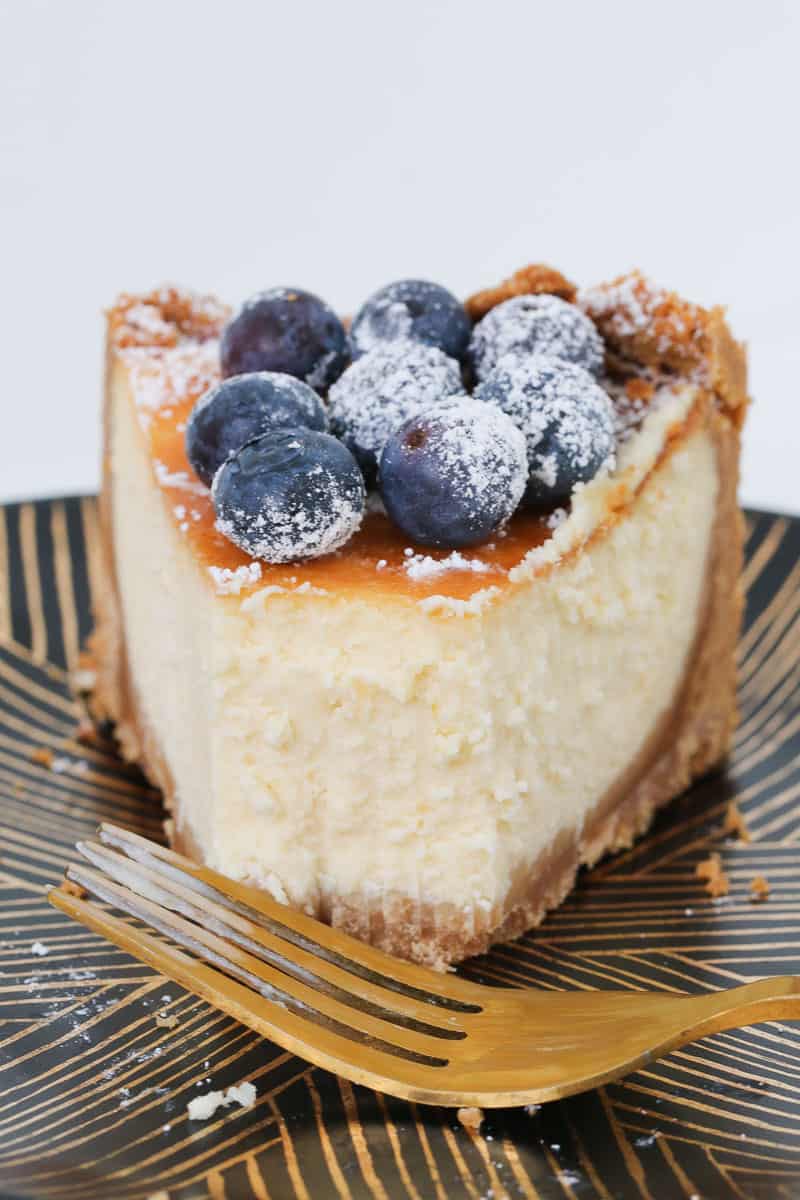
More Baked Cheesecake Recipes To Try
How To Store A Baked Cheesecake
Here's how to store a baked cheesecake:
- Allow it to cool for 2 hours in the oven (with the oven switched off and the door closed).
- Move the cheesecake onto the bench (still in the baking tin) and allow it to cool completely.
- Place the cheesecake (still in the baking tin) into the fridge for a minimum of 4 hours (preferably overnight).
- Allow to come to room temperature for 1 hour before serving.
- Baked cheesecakes can be stored in the fridge in an airtight container or wrapped in plastic wrap and covered in foil and consumed within 5 days.
- Alternatively, you can freeze the cheesecake for up to 1 month - simply wrap in foil and then place into an airtight container. Remove the cheesecake from the freezer the night before you plan to use it and allow it to defrost in the refrigerator.
- Decorate your cheesecake just before serving.
WANT EVEN MORE DELICIOUS RECIPES? Subscribe to my newsletter or follow along on Facebook or Instagram. And if you love baking, then please come and join my Facebook cooking club group or subscribe to my YouTube channel.
patricia Light says
Thankyou for sharing your delicious recipes This cheesecake recipe is "Not Only to die for" but simple to make and never fails and your baking tips are so helpful .I receive rave remarks whenever I make it!
Lucy says
Oh thank you so much! You've absolutely made my day! x
Yury says
Thanks it was very useful
Lucy says
I'm so glad!