

Run out of buttermilk halfway through a recipe? Don't panic, you can make your own in 6 minutes flat.
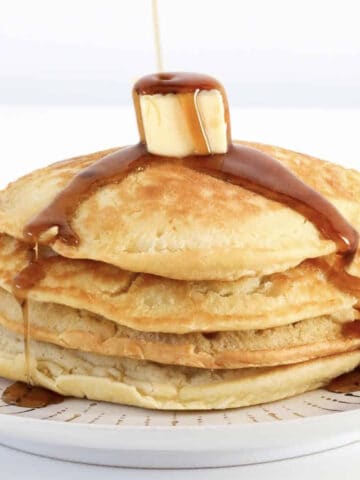
No more buying a giant carton just for one tablespoon. This little kitchen trick is perfect for topping up a batch of Cheese And Bacon Scones or a stack of fluffy Thermomix Pancakes, and it costs you basically nothing.
A Quick Look At The Recipe
🍽️ Recipe: How To Make Buttermilk
⏱️ Ready In: 6 minutes (1 min prep + 5 min rest)
🥣 Makes: 1 cup
🔥 Calories: 150kcal per serve
🥛 Main Ingredients: Milk + lemon juice or white vinegar
🌱 Dietary Info: Vegetarian, gluten free, dairy-free option, Thermomix method included
❤️ Why You'll Love It: Just 2 ingredients, ready before your oven's even preheated, no more last-minute servo run
SUMMARIZE & SAVE THIS CONTENT ON
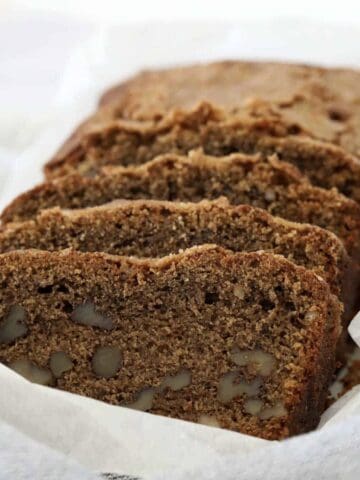
Buttermilk pops up in loads of recipes, from tender Finger Buns to a moist Coffee Walnut Loaf, but you almost never need a whole carton.
This trick uses milk you've already got in the fridge, and it works just as well in the Thermomix as it does with a jar and a spoon.
Jump to:
Why You're Going To Love This Recipe
- No more midnight servo runs when a recipe needs buttermilk and all you've got is normal milk.
- Just 2 ingredients, and you probably already have both of them.
- Ready in 6 minutes, most of which is just leaving it alone on the bench.
- Works exactly the same whether you're using a jar and a spoon or your Thermomix.
How To Make Buttermilk
All you need is 1 cup of milk and 1 tablespoon of lemon juice or white vinegar. That's it. Here's how it comes together.
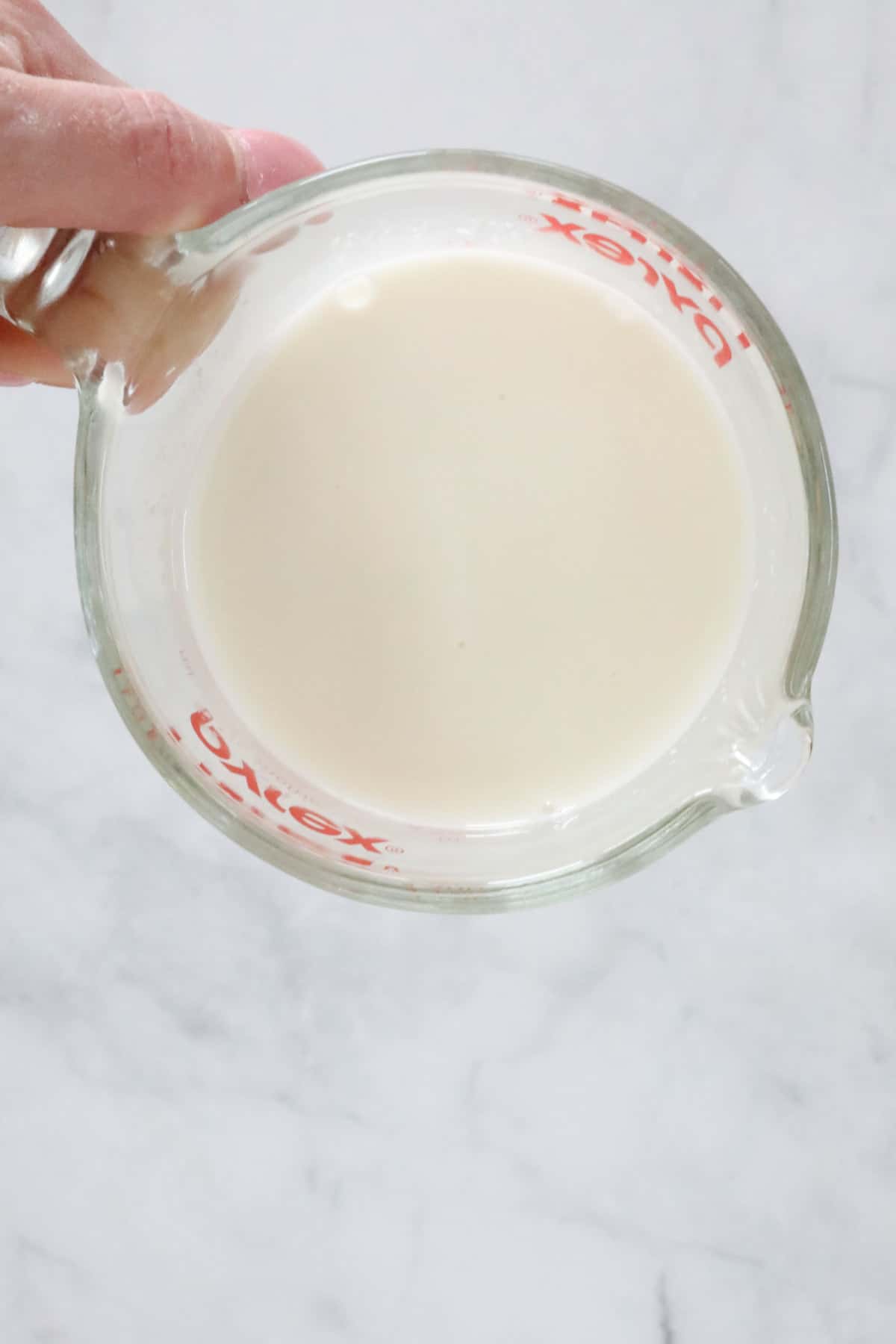
- Step 1: Pour the milk into a jar or bowl. Full cream milk gives the thickest result, but any milk will do.
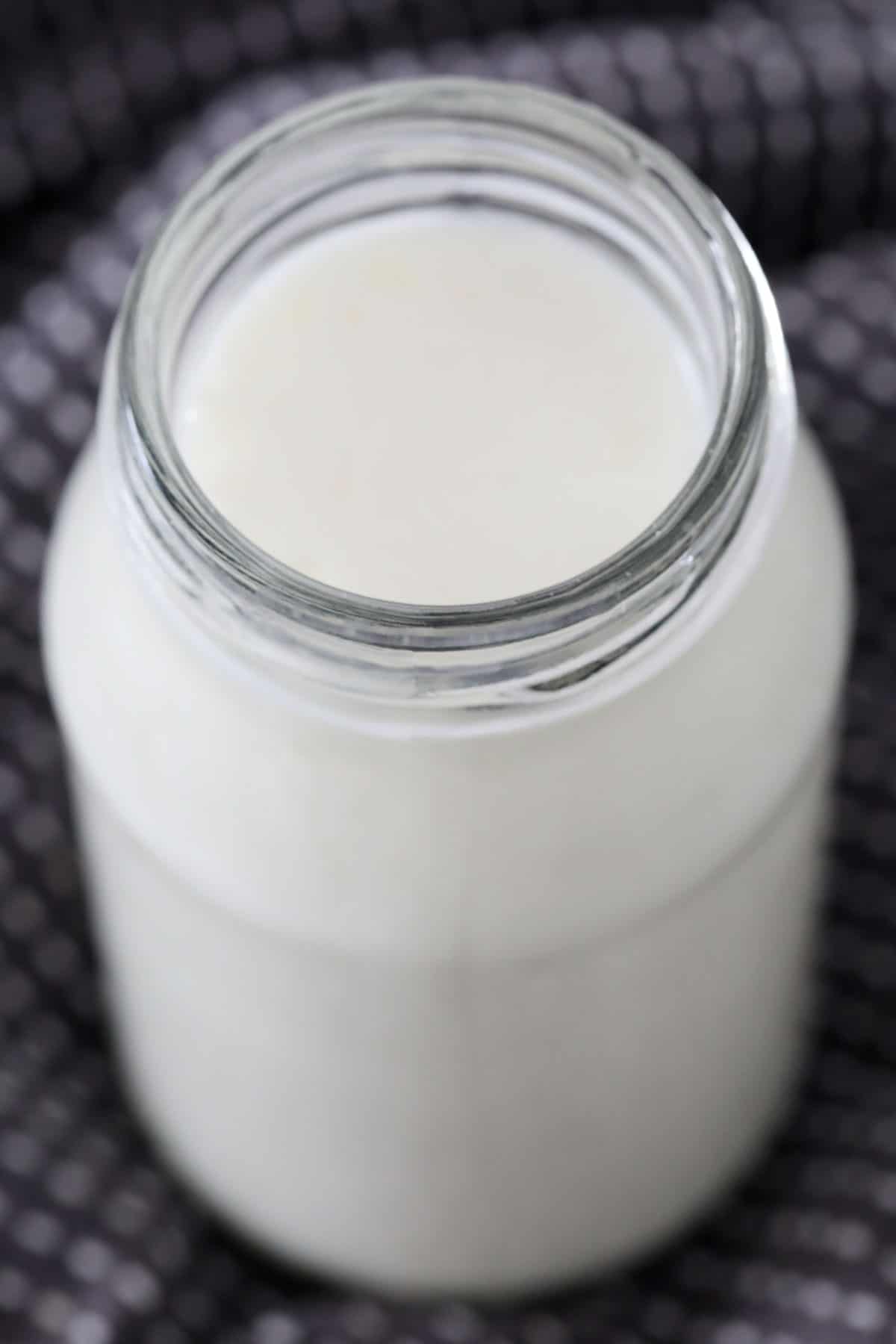
- Step 2: Add the lemon juice or vinegar and stir it through. Just a regular stir with a spoon is all it needs.
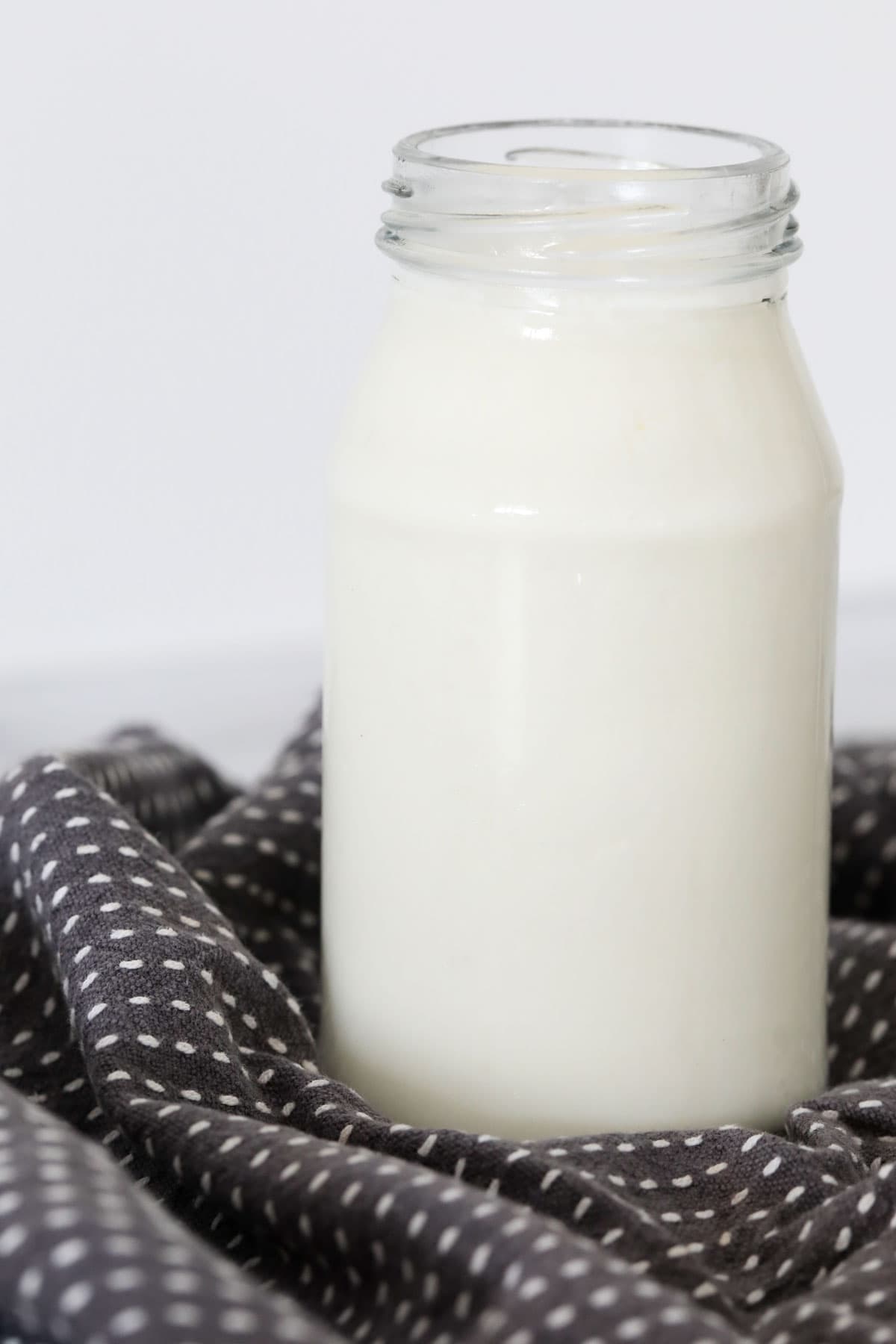
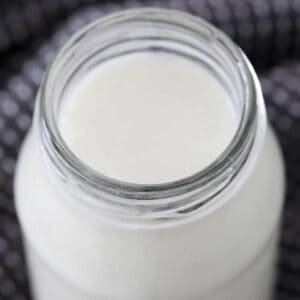
- Step 3: Leave it on the bench for 5 minutes. It'll go slightly thick and curdled looking. That's exactly what you want.
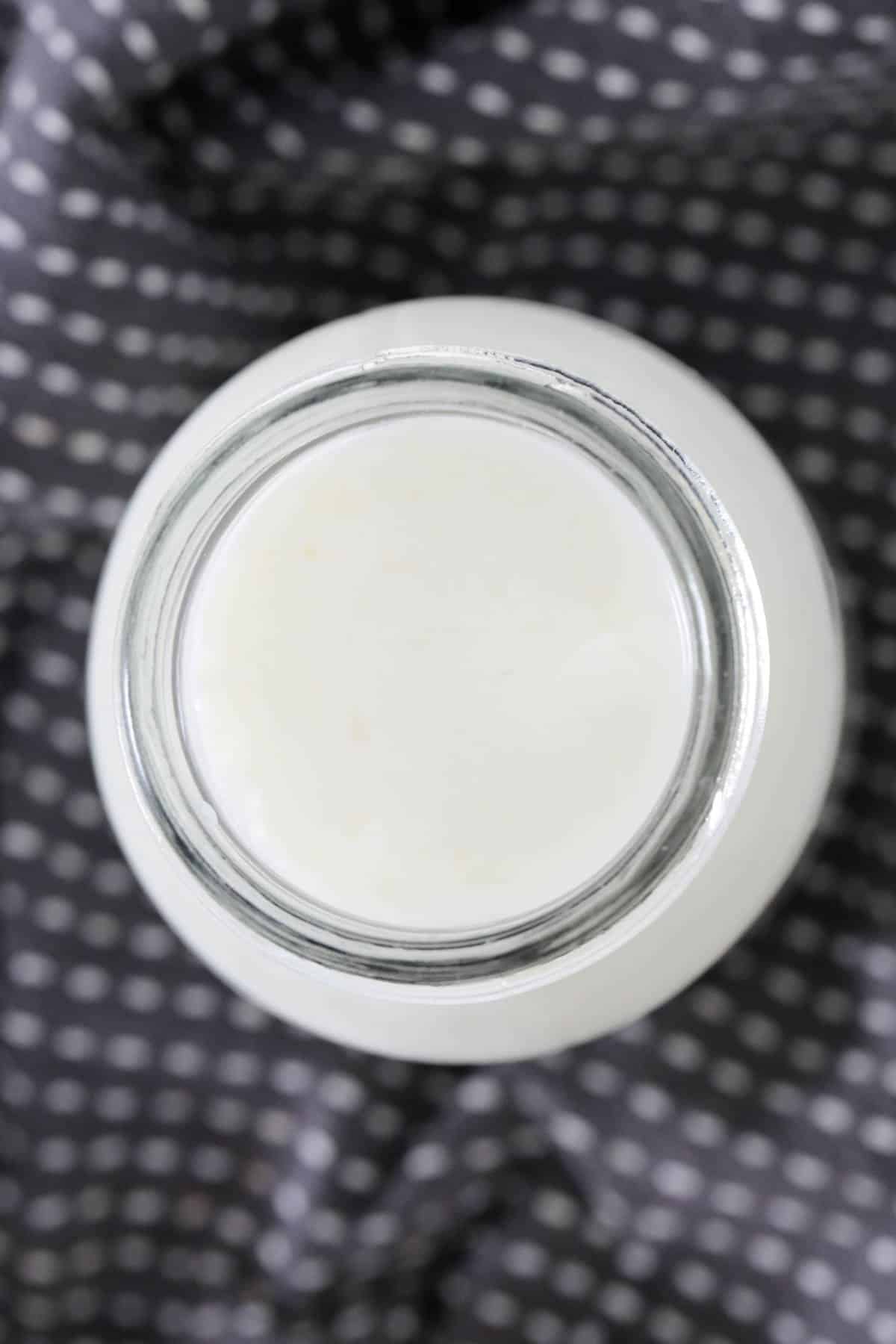
- Step 4: Give it one last stir and use it straight away. Your homemade buttermilk is ready to go.
Team Thermomix? Weigh the milk and lemon juice (or vinegar) straight into the mixing bowl and mix 30 sec/speed 1 to combine, then leave it in the bowl for 5 minutes to thicken, same as the stovetop version. One bowl, no extra dishes.
Buttermilk Ingredients
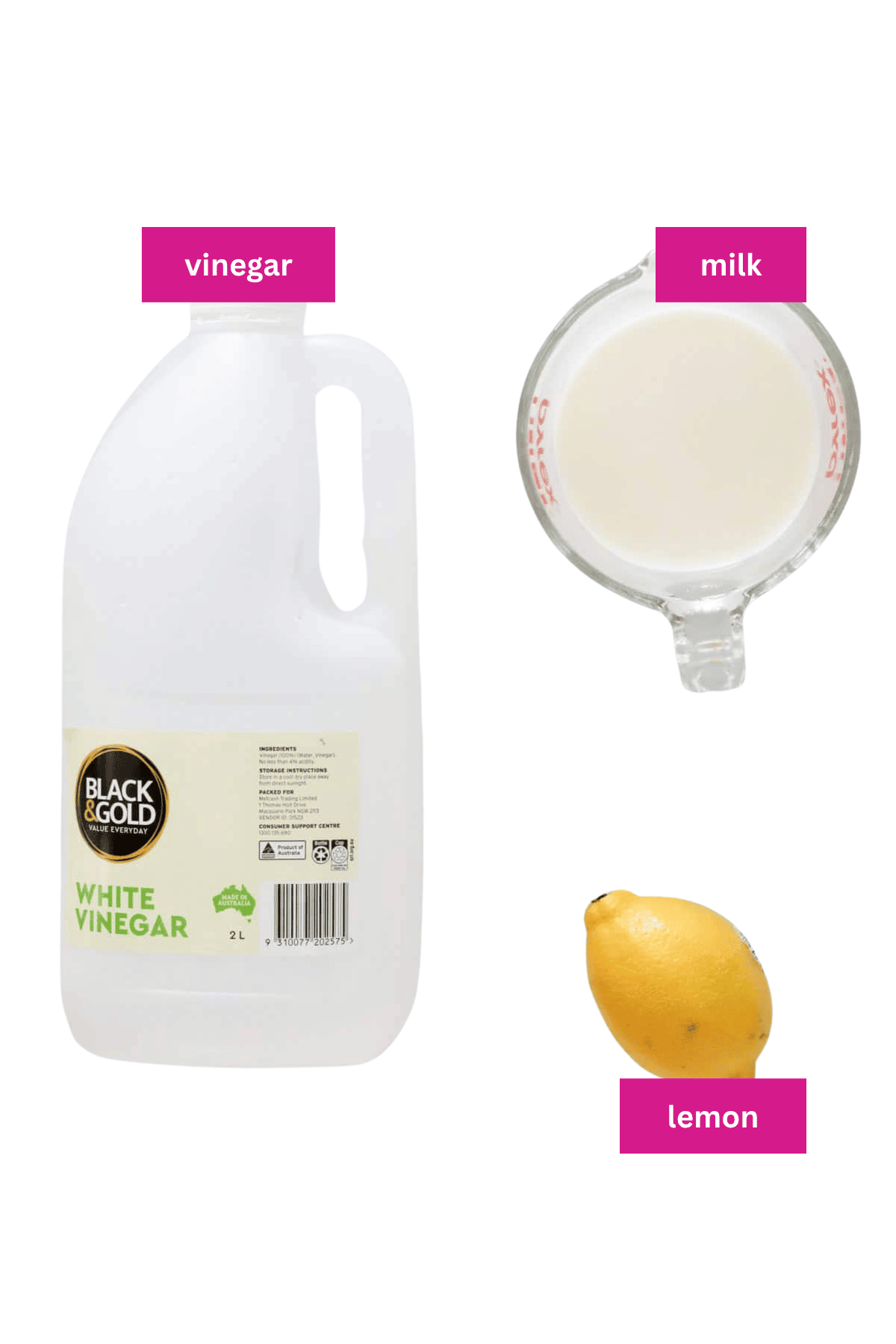
You really only need 2 things: milk, and something acidic.
- Lemon juice vs white vinegar - either works, and the end result is basically the same. Lemon juice gives a slightly fresher, more citrusy edge, while white vinegar is more neutral and won't add any flavour at all. I just use whatever's closest to hand.
- Milk - full cream milk gives the thickest, richest buttermilk, but reduced fat and skim both work fine too. Just note the thinner the milk, the thinner your buttermilk will be.
Variations
- No milk and vinegar on hand? Buttermilk powder mixed according to the packet works a treat, and it's worth keeping a tin in the pantry if you bake often.
- Sour cream or natural yoghurt - thin it out with a splash of milk until it's pourable. Works well in cakes and muffins, though it's a bit thicker than the real thing.
- Got kefir in the fridge? It's a straight 1:1 swap for buttermilk, no acid needed at all.
- Dairy-free? Use soy or oat milk with the same tablespoon of lemon juice or vinegar. I'd steer clear of almond milk here, it can curdle strangely and doesn't thicken properly.
Recipe Tips
- Storage: keep it in a sealed jar or container in the fridge for up to 14 days.
- Freezing: pop it in the freezer for up to 3 months. It goes a bit grainy once thawed, but it's still totally fine to bake with, just give it a good shake or stir first.
- Not thickening? Your milk was probably too cold. Let it sit on the bench a bit longer, or start with milk that's closer to room temperature.
- Need a smaller amount? 1 tablespoon of vinegar or lemon juice is the same as 3 teaspoons, so you can easily scale the whole thing down for a smaller quantity.
What Is Buttermilk And What Can You Use It For?
Traditionally, buttermilk was just the liquid left behind after churning cream into butter. These days, the buttermilk you buy at the supermarket is actually cultured milk, meaning it's had a bacteria added to it that makes it thicken and turn slightly tart and acidic, kind of like a mild yoghurt. The homemade version in this post isn't exactly the same thing (there's no culturing happening, just a quick reaction between the milk and the acid) but it behaves the same way in almost every recipe, which is really all that matters.
So what does it actually do in your baking? The acid in buttermilk reacts with bicarb soda to help things rise, which is why pancakes and scones made with buttermilk come out noticeably fluffier and lighter than the same recipe made with regular milk. In cakes, it breaks down the gluten a little, giving you a softer, more tender crumb. And in biscuits, it's the difference between a dry, crumbly result and one with a bit of a melt-in-your-mouth texture.
It's not just for sweet baking either. The acidity makes it brilliant for marinating meat (it gently breaks down the proteins, so your chicken ends up more tender), and it makes a great base for a tangy, creamy salad dressing if you whisk it with a bit of mayo, herbs and garlic.
Buttermilk FAQs
Honestly, either is fine. Lemon juice gives a slightly fresher, citrusy note, while white vinegar is more neutral and won't change the flavour at all. They both thicken the milk the exact same way, so pick whichever you've got open in the pantry.
Kept in a sealed container in the fridge, it'll last up to 14 days. You can also freeze it for up to 3 months if you want to make a bigger batch. It gets a bit grainy after freezing, but it's still perfectly fine to bake with.
Yep. Swap the milk for soy or oat milk and use the same tablespoon of lemon juice or vinegar. I wouldn't bother with almond milk though, it tends to curdle oddly instead of thickening properly.
Definitely, it's not just a baking ingredient. It's great for marinating chicken (the acidity tenderises it beautifully), and it makes a lovely tangy base for a creamy salad dressing.
Yes, homemade or store-bought, it freezes well for up to 3 months. The texture goes a little grainy once it's thawed, but it works exactly the same in your baking, just give it a good stir or shake first.
More Recipes To Use Your Buttermilk In
Now that you've got a jar of homemade buttermilk sitting in the fridge, here's where a splash of it works brilliantly in place of regular milk.


How To Make Buttermilk
Ingredients
- 1 cup milk full cream is preferable
- 1 tbs lemon juice OR white vinegar
Instructions
Conventional Method
- Pour the milk into a jar or bowl.
- Stir through 1 tbs of either lemon juice or white vinegar.
- Leave for 5 minutes.Note: the milk will become slightly curdled.
- Use the buttermilk in your favourite recipes!
Thermomix Method
- Weigh the milk and lemon juice (or vinegar) straight into the mixing bowl and mix 30 sec/speed 1 to combine, then leave it in the bowl for 5 minutes to thicken, same as the stovetop version.
Notes
- I recommend using full-cream milk for best results, although you can use any type of milk really, even dairy-free milks such as nut milk, soy or vegan milk, if you prefer.
- Use any clear, or almost clear vinegar, such as regular white vinegar, white wine vinegar or apple cider vinegar.
- If you use lemon juice, either freshly squeezed or store bought lemon juice work equally well.
- Allow the buttermilk to sit at room temperature for at least 5 minutes, and up to 10 minutes, for the acidity to form.
- Storage - you can store homemade buttermilk in a sealed glass container in the fridge for up to 14 days.
- Freeze buttermilk in a sealed container for up to 3 months. The texture will be a little grainy when thawed, but it is still perfectly suitable to use in your baking.
Leave a Reply